.avif)
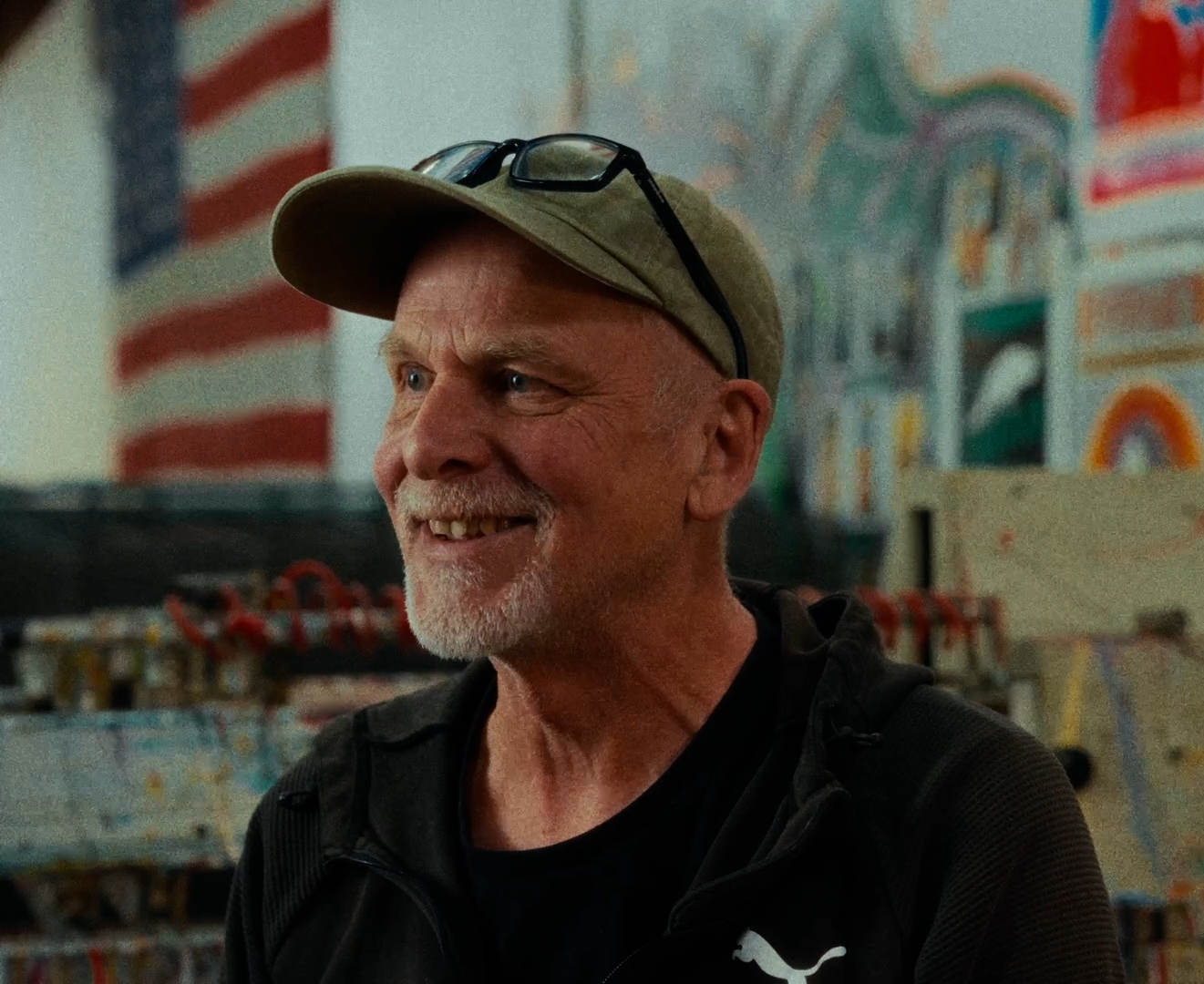
Chuck Sperry cannot remember a time before art. He grew up in Dayton, Ohio, the son of two artists: a sculptor father and a mother rising through the ranks in advertising. Paints and drawing materials were around from the crib. Art was never something foreign or precious to him. It was just what adults did.
His parents, for all that, got nervous about him making a career of it, and pushed him toward something practical. So he aimed at journalism and enrolled at the University of Missouri. The pull didn't hold. A few months in, he looked at the political cartoon on the student paper's op-ed page, decided he could do better, and talked his way into the job. For the next three and a half years he drew two cartoons a week.
That is where he learned the thing that still shapes his work: how to speak straight to an audience.
"You really are saying what you need to say to those people, getting to know your audience and what fires them up."
Then came New York. He landed on the Lower East Side during the art boom, when Basquiat was blowing up and Keith Haring was running the Pop Shop, and fell in with the illustrators behind World War Three Illustrated, a self-published political comic. Over five years his instinct shifted. He lost interest in dark, oppositional imagery and moved toward something hopeful.
"My images actualize where we could go, this utopian vision we could manifest if we just focus on ourselves and our goals."
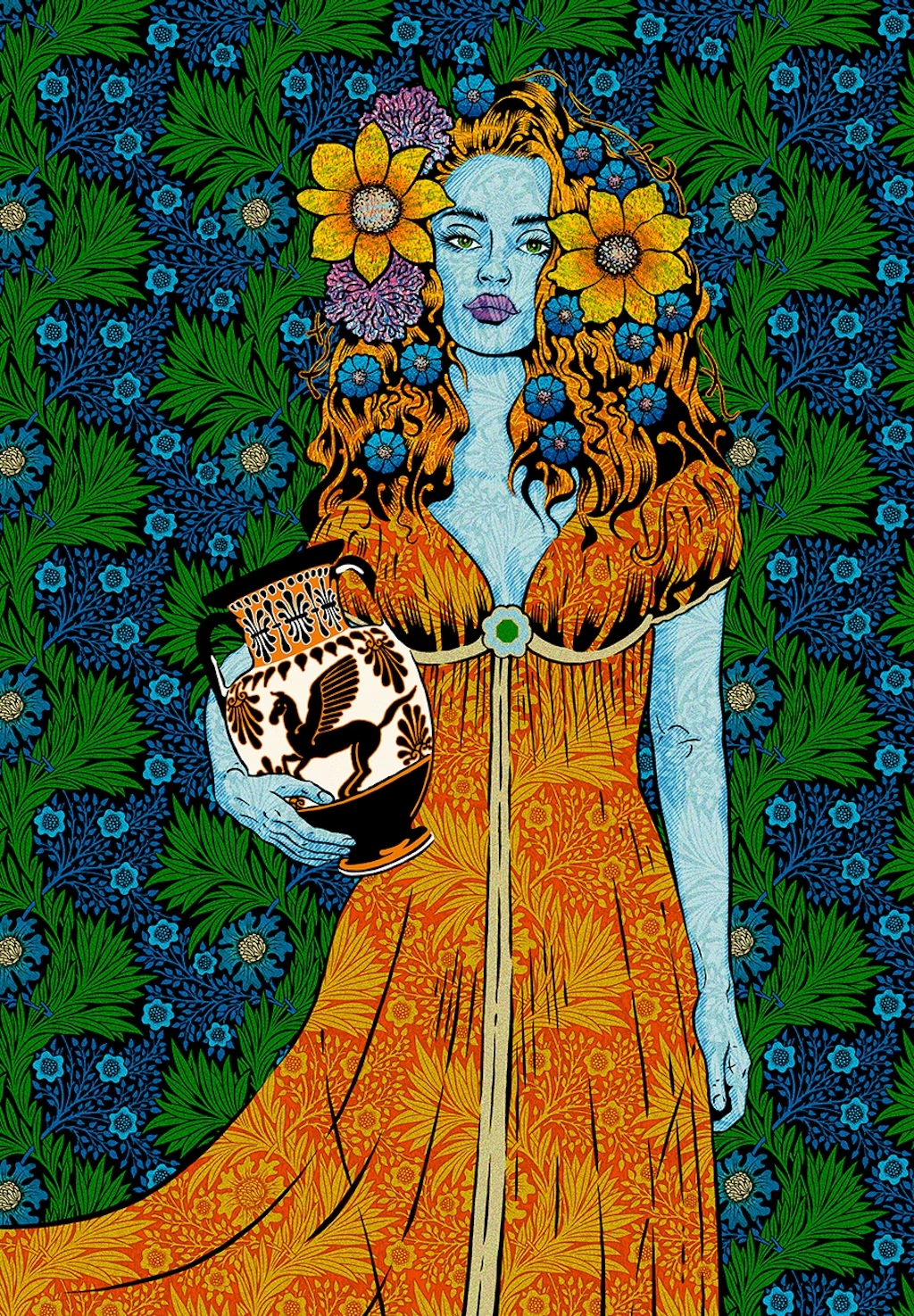
That instinct is still there. Today his work centers on Greek goddesses and muses, not as dusty myth but as living figures who carry ideals like courage, justice, and equality straight at you. The style pulls from two places he loves: the psychedelic poster art of 1960s San Francisco, where he still lives up in the Haight, and the layered chaos of street tags he photographs in back alleys and works into his backgrounds. The first thing most people feel when they see a Sperry, he says, is that it is fresh, and that it is positive.

The craft
From spark to finished print takes him about ten days to two weeks. He sketches on printer paper, refines on a light table, and inks on heavy stock, then stops himself before he does too much. The trick, he says, is knowing when to leave the drawing alone.
"If you listen to jazz, these guys never step on each other. One guy plays, then the other picks it up."
He leaves the black line open on purpose, because six more colors are coming: silver, gold, red, yellow, blue, a white glaze, and black. Each one is burned to its own screen and pulled by hand, one at a time, drying in between. It is slow, physical work, and he would not have it any other way.

Built on a direct line to fans
Long before his work hung in a museum, Sperry was selling it straight to the people who wanted it. In the mid-90s he was making Fillmore posters for Bill Graham Presents, working out of a decommissioned San Francisco firehouse with his late partner Ron Donovan, cars parked in the engine bay and a fire pole in the middle of the floor. Big commercial jobs came through the door, including Virgin Megastore reissues for the Beatles, the Rolling Stones, and Fleetwood Mac, pulled 3,000 at a time by hand. Then he and Donovan took to touring Europe, selling posters directly to fans out of bars, squats, and galleries, growing from a handful of stops to 25 cities a summer.
The recognition followed. His work has been shown at the Smithsonian's Cooper Hewitt, and his work lives in the permanent collections of SFMoMA, the Rock and Roll Hall of Fame, and the Fort Wayne Museum of Art gave him a full retrospective, which is rare for a living artist. But the thing he keeps coming back to is not the institutions. It is the collectors.
"I don't think you can build trust with your collector base if you're not fair with them."
He won't pre-release a poster to someone jumping the line, because there are hundreds of people waiting and it isn't fair. A fair, equitable shot for everyone who shows up has been his position since before the internet made it hard to keep. And, as he puts it, "I always do what I say I'm going to do."
The day the site melted
Then it got hard to keep. Through the pandemic, the flipper economy overheated. Bots got cheap, the tricks got passed around, and the resale market ran hot. When concerts came back, Sperry put out Venus, the companion to a Widespread Panic poster people had been waiting years for. It was a perfect storm.
On March 8, 2023, a date he calls dark on his calendar, his site took 2.2 million hits in the first three minutes. It buckled, then dissolved into random letters and numbers. The platform's own technician told him it was the most spectacular meltdown he had seen, worse than a sneaker drop. It took five hours to get back online. Then Sperry sorted through some 7,000 sign-ups by hand.
The math simply did not work: a few hundred prints, thousands of real fans, and a system that collapsed under the weight of the bots every single time. If every launch ended like this, he couldn't make a living, which meant he couldn't make new work.
So he made his community a promise. He would find a better way. And he does what he says.

A better way
The lead came from his friend Andrew Tebb at Fast Times Skateboards. Fast Times Skateboards in Melbourne, the shop behind one of his Nick Cave decks. It pointed him to EQL.
The first call clicked fast. Sperry, who understood proxies and bot behavior better than most people half his age, recognized the fix right away. More than that, he recognized the belief behind it.
"When I became acquainted with EQL, I saw that's exactly their motto."
His first launch on EQL was a set of collectible cards drawn from his book Color by Color. Five hundred sets, a 48-hour entry window over a weekend, and a single link he could share anywhere. No refreshing, no melted site, no hours lost to F5. It sold through completely, scored 4.9 out of 5 with collectors, and nine in ten said they would recommend the experience. He has since pointed other artists toward it.
His own launch days look different now, too. Instead of watching his computer like a hawk, he can check in now and then, keep printing, and let the launch run. Three hundred posters reach three hundred real fans, and he can, in his words, "be onto the next poster, print or project."