.avif)
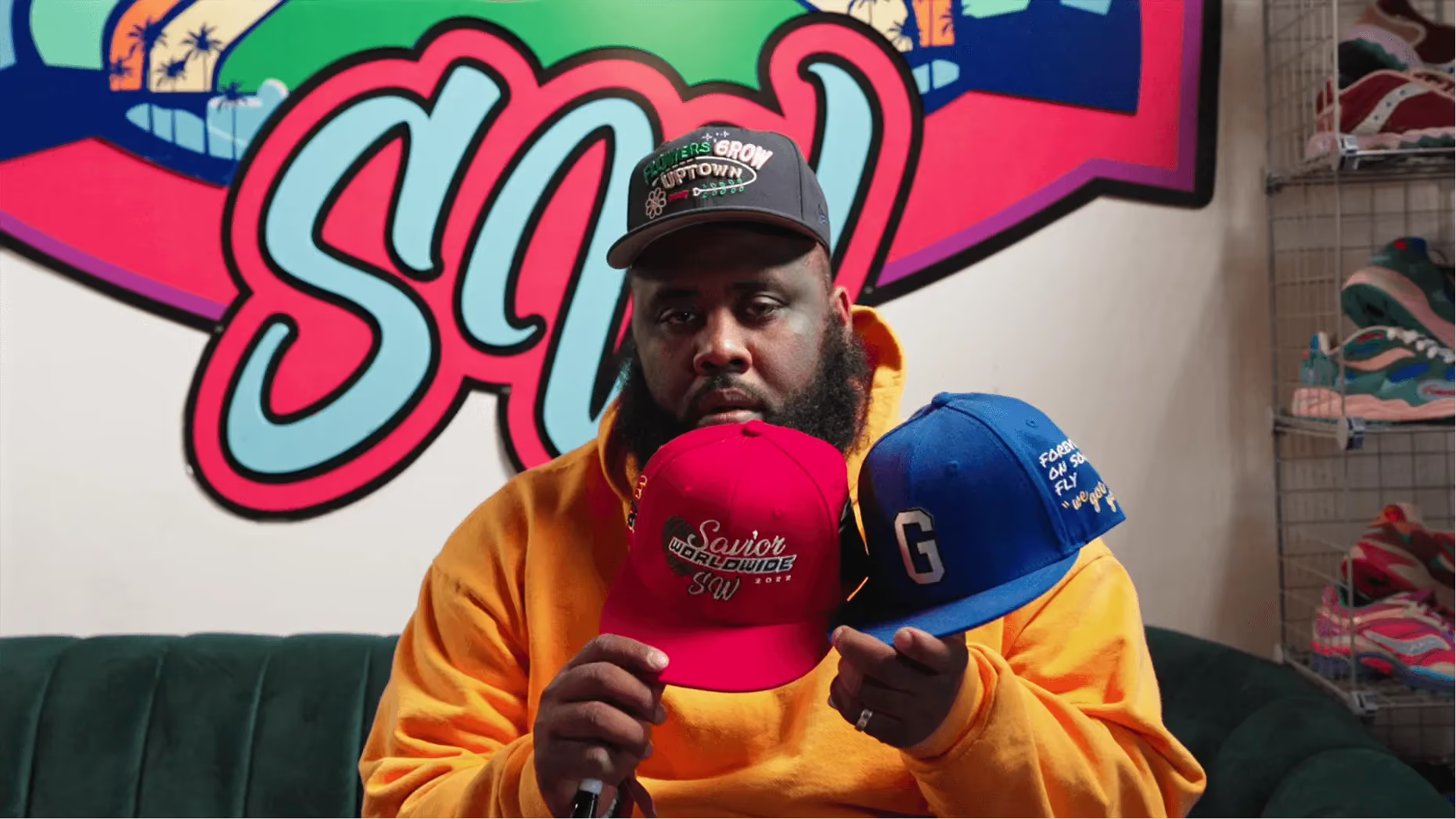
The EQL team had a rare opportunity to sit down with the designer and creative director of Savior Worldwide, Jae Tips. We couldn’t miss this chance to pick the brain of one of the leading voices in the sneaker community, or gatekeep this moment from our community of sneakerheads, especially after a legendary run as the first to win 3 consecutive SOTY awards from Nice Kicks.
Here’s what we talked to Jae about, Q&A style:
Let’s start at the beginning. Before fashion was an industry to you, what did you love?
Before I even knew this was an industry, I loved basketball. I loved sports. I had young parents who loved material things - clothes, shoes. That planted a seed in me early. It became second nature to love sneakers and fashion.
As I got older, it wasn’t just about collecting anymore. I wanted to get closer to shoes. I wanted to know how they were made. What was really in the oven. How it all came together. Being on this side of the industry now, as a collaborator, is important to me. It’s important to my city. And I’m honored by the path.
Do you remember your first pair of shoes?
Yeah. A pair of Reebok Classics. My family actually still has them tied together with paperwork from the hospital, stored in a shoebox. So I always know that was my first pair.
You’re known for having a very distinct point of view. Has that always been part of who you are?
I remember being in middle school, going into high school, and just seeing things differently. I didn’t see outfits the way other kids did. I’d think about how a yellow hoodie looked with black shoes, or how red shoes worked with a blue shirt.
People would say I was mismatching, but I didn’t see it that way. I saw it as art. And now I can see that same instinct all through my work.
I don’t even really think of myself as a designer first. I’m more like a scout. I recognize things and ask why. Why don’t we see certain colors together more often? Why isn’t there more marriage between styles? When I get an opportunity, I try to put those ideas into the marketplace. If I’ve never seen it before, I want to try it.
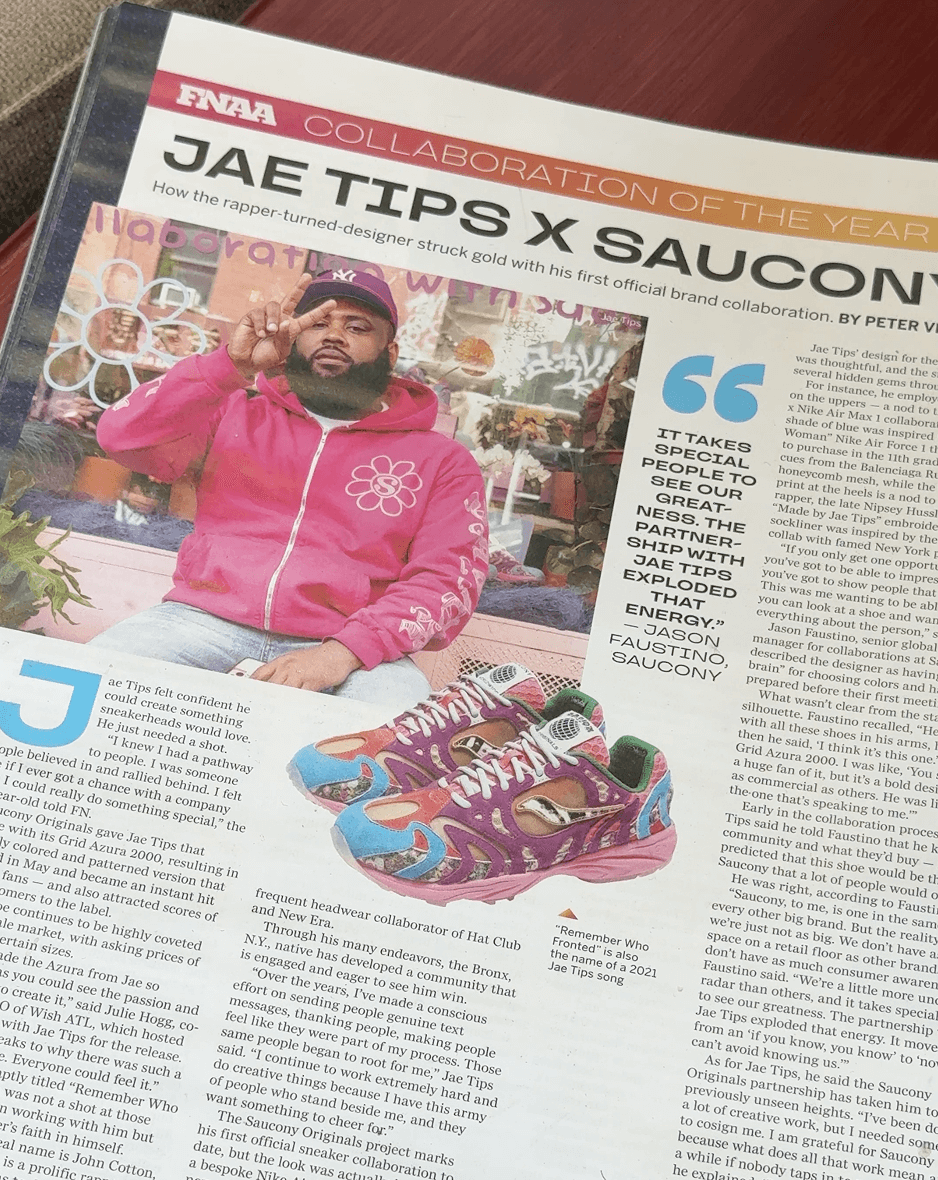
Nature and color show up constantly in your work. Where does that come from?
I’m very obsessed with the world around us. I think people get so caught up in their own lives that they forget everything around us is living and breathing too.
Growing up in New York, people always talk about the concrete, the Yankees, the toughness. But I wanted to tell the story of New York through the eyes of a kid with idle time. Sitting on corners. Taking the bus to school. Looking out the window.
I noticed leaves, flowers, grass, plants - all of it. And those things change with the seasons, just like we do. New York isn’t just a concrete jungle. There’s a lot more there, and I try to bring that into my art.
How does inspiration actually strike for you? Is it quiet moments, observation, or something else?
I’ve spent a lot of time in quiet places. I’ve been an entrepreneur since I was 23. When I stopped working at Foot Locker, a lot of my time was about trying to figure out what was next.
My dad gave me some great advice growing up. He said a really talented observer sees something in everything. Even in things you don’t like, you can still see the value. You can understand why someone else connects to it.
That stuck with me. Being able to turn nothing into something. If this is all I have in front of me, I have to figure out what to do with it. That mindset shaped how I work.
Color is central to your designs. What does color mean to you?
Color invokes emotion. You don’t wear certain colors unless you’re in a good mood, or looking forward to something.
Fashion is full of safe colors - whites, blacks, grays, browns. The analytics even show those colors sell better. But I’ve always seen myself as someone outside the lines. I want to make the unperfect feel perfect.
I remember telling Saucony early on that my motivation was simple: if I see a shoe on a wall and immediately know it’s special because it looks like nothing else around it, then I’ve done my job. That feeling - not knowing exactly why something stands out, but knowing it does - that’s what I chase.
Where do specific color combinations come from?
A lot of it is for the child version of me. Favorite Disney characters. Favorite Polo shirts. Movie covers. Things that were undervalued elsewhere.
I’d look at something and think, why has no one ever put this colorway on a shoe? I spent a lot of time alone sketching, putting colors together, asking why something shouldn’t work.
Even now, I’ll walk into a room with a few color strips and say, no matter what I design next, these are the next Jae Tips colors. It’s all stored in my head - moments from childhood that felt good and shaped who I am.
.png)
What usually comes first: the design or the story?
The design comes first. But the story shapes the final design.
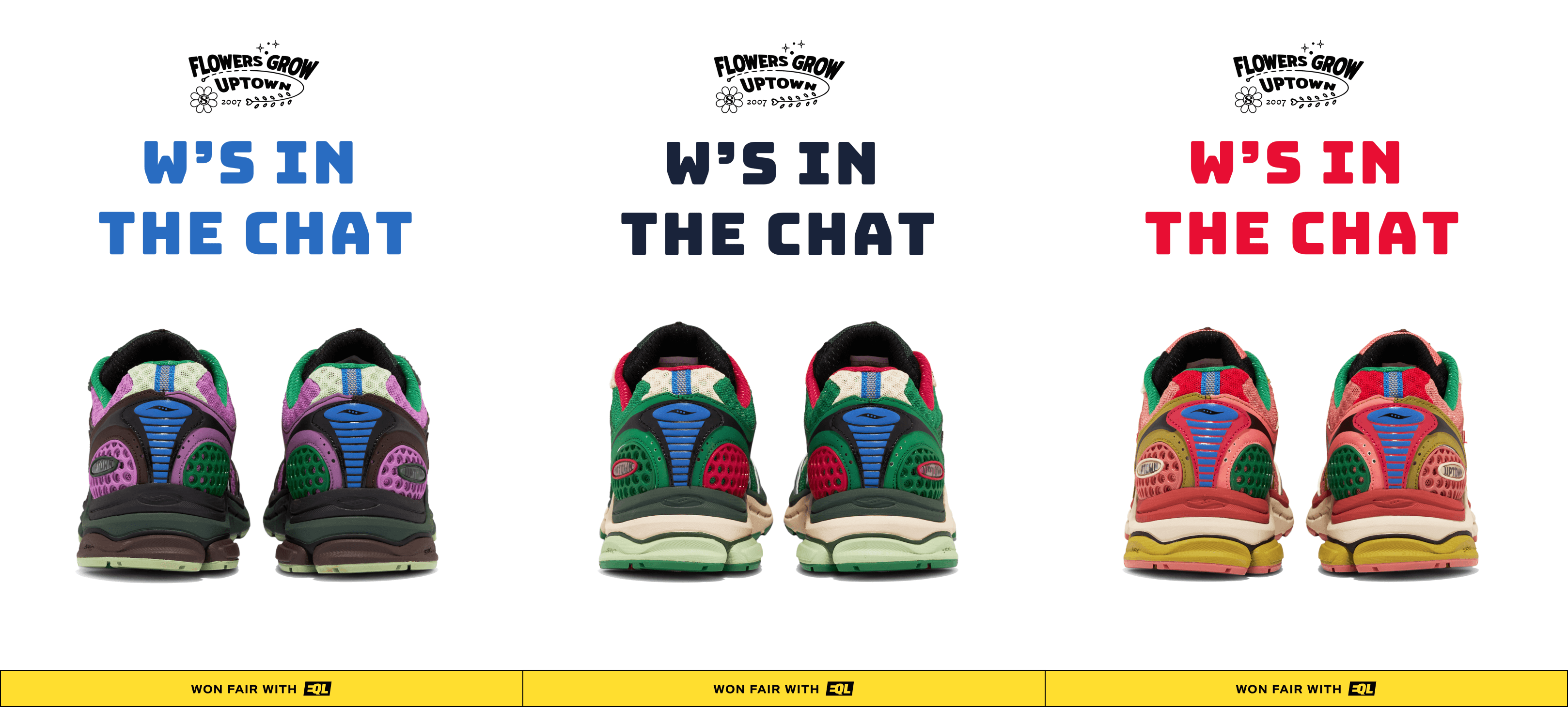
For example, in my Flowers Grow Uptown collection, the all-green pair has a different sock liner than the others. The others represent phases of growth, imperfections. That final shoe represents excellence - the fully grown plant.
So we changed details: the sock liner, the tongue. Small things, but intentional. The story has to show up in the product, otherwise it feels empty.
As your brand grows, how do you balance creativity with business?
You have to learn how to stay here. Getting here is special, but staying here is the work.
You can’t shoot everything at once. You have to balance collections, bills, energy. You have to leave room for the future. I’ve seen great brands not get second chances because the business wasn’t right, or the process became too difficult.
You have to be easy to work with. Put out good product. Have your business together. That’s how you earn longevity.
How does data influence creative decisions?
Sometimes you have to be honest with yourself. Not everyone needs more shoes. Sometimes a release is just a splash.
Analytics help you understand appetite. They help you avoid forcing something just because you love it. Ordering the right inventory alone can change the trajectory of a brand for a year.
You talk a lot about fairness when it comes to releases. What does fairness mean to you?
To me, fairness is really just the opportunity to participate.
When it comes to sneaker releases - most of mine growing up were in person - you’d get there and the shoes would already be sold out. You didn’t really know how many pairs there were, how many were around, what other stores had them. There wasn’t much information at all.
That’s really disheartening. It takes you out of it.
With a platform like EQL, you know you had a real chance. You know you were able to try. You get a chance to brag about it. That helps build community.
I remember being in cars with a bunch of my friends and we’re all just quiet because we took that promising ride somewhere but none of us were able to get the shoes we wanted.
With EQL, you get that assurance you were able to participate.
My first release without EQL, I got destroyed online. No matter how much you explain traffic or bots, people don’t hear it. Fairness protects the work. It lets people talk about the product, not the chaos.
How has working with EQL changed your process?
It saved me time. I was a one-man show for a long time - handling everything manually. Now things feel seamless.
The analytics are huge for me. They help prove demand. If you want to scale, you need data to back it up. Otherwise it’s just a liability.
Understanding sizes, regions, performance - all of that helps me grow responsibly.
How important is community to you, especially in the Bronx?
It’s everything. Representation matters. Sometimes kids only see success in music videos or sports.
If someone sees me at a Dunkin’ Donuts, or knows I shot a campaign on their block, that gives hope. I’m not hanging on corners like I used to, but I stay rooted. You’re doing more than you realize just by being visible.
.jpeg)
Has there been a moment where it really hit you?
Recently, we shot a campaign on the same corner I used to hang out on. Cars were honking. People were yelling my name.
I can be all over the world - Paris, Brooklyn, online - but that corner still matters. That’s where we shared beef patties and Chinese food. Being able to stand there now means everything.
Looking ahead, what’s next for Savior Worldwide?
Continued growth. Headwear and shoes have been strong, but I want the brand to stand on its own.
I don’t want to be at every booth forever. Michael Jordan sells shoes without signing boxes. There’s a point where you let the brand be great.
Finally, what do you want your legacy to be?
I want to be a bridge.
I love selling product. I love traveling and events. But for someone who doesn’t think this life is possible, I want to be proof that it is.
My impact will be bigger than anything I personally accomplish. That’s what matters most.
We don’t usually do long sit-down interviews like this, but this one felt worth slowing down for. Huge thanks to Jae for taking the time to walk us through his world, his process, and the moments that shaped him. We’re grateful for the honesty, the perspective, and the trust - and excited to keep building alongside him.