.avif)
Sneaker culture is in the middle of a quiet shift.
For years, success was measured in seconds. How fast something sold out. How much chaos surrounded the drop. How many people were left refreshing pages and airing frustrations afterward. That disorder was often accepted as proof of demand, and even celebrated.
But more creators are starting to question what that chaos actually costs. Not just in public perception, but in trust, longevity, and community goodwill.
Jae Tips has been thinking about that shift for years.
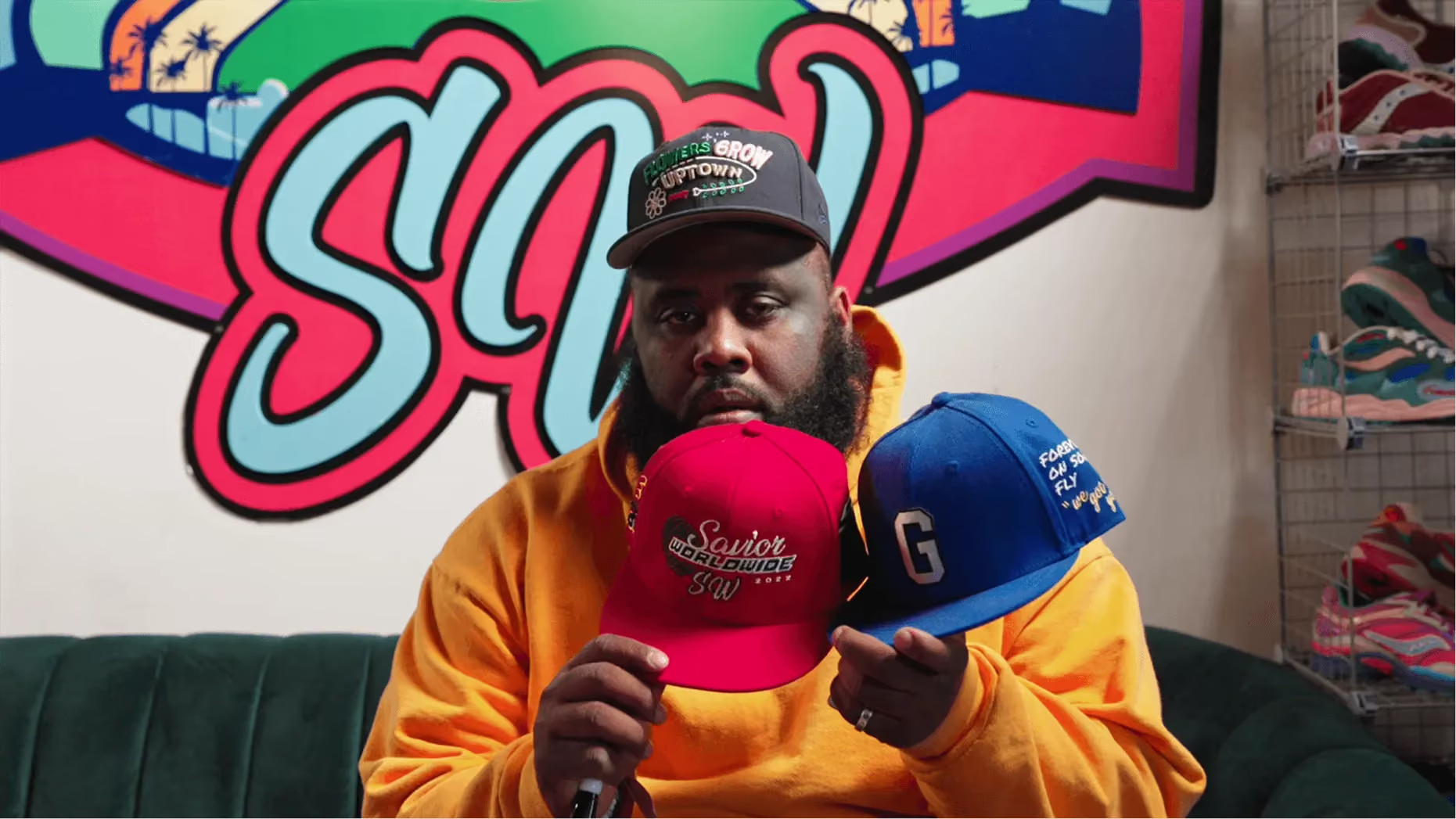
When we sat down with him in the Bronx, the conversation wasn’t about hype cycles or resale numbers. It focused on what launches leave behind, and how fairness has become an increasingly important part of his creative process.
Growing up inside culture
Jae’s perspective is grounded in where he comes from. The Bronx isn’t a brand asset for him. It’s context.
“I’m from the Bronx,” he says simply. “That’s always going to be a part of me.”
Growing up surrounded by music, fashion, and constant creative energy shaped how he sees expression. Not as something distant or exclusive, but as something woven into everyday life. He didn’t grow up imagining himself as a sneaker designer or collaborator. He grew up absorbing culture, style, and storytelling long before he had language for it.
That grounding still informs how he moves today.
When demand turns into backlash
Jae’s early releases drew real attention and real frustration. His first major drop is something he remembers clearly, not because of its success, but because of what followed.
“My first release, I didn’t have EQL, and I got chewed up online all day,” he recalls.

From his perspective, nothing malicious had happened. The site was overwhelmed. People missed out. But explanations didn’t matter once frustration set in.
“I can write as many paragraphs as I want about, ‘It wasn’t bots, it was just traffic,’” he says. “But when people lose, they don’t feel that. They feel like something went wrong.”
That moment forced an uncomfortable realization. A launch can succeed technically and still fail emotionally. And when people walk away feeling shut out, that feeling becomes part of the brand, sometimes louder than the product itself.
Rethinking what a good launch looks like
As Jae continued releasing work, the idea that chaos equaled success started to feel hollow.
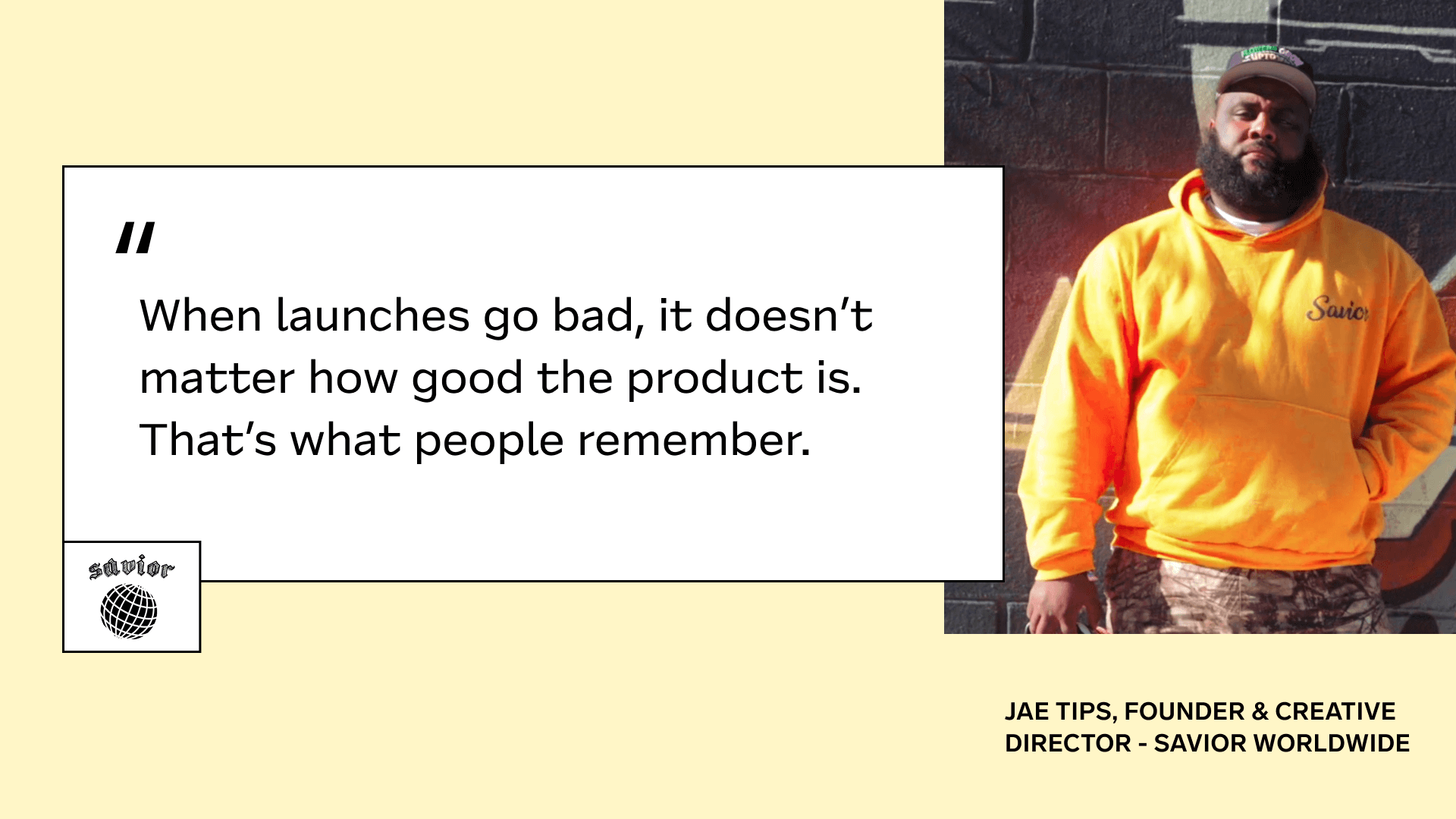
“When launches go bad, it doesn’t matter how good the product is,” he says. “That’s what people remember.”
For him, moving toward fair launches wasn’t about reducing demand or dulling excitement. It was about restoring credibility.
“It was a great platform to be able to just make sure everybody gets their moment, and at least they feel it’s fair.”
Fairness, in this sense, doesn’t mean everyone wins. It means people believe the process wasn’t stacked against them.
“When people feel like they had a real shot,” Jae explains, “that changes the whole conversation.”
Transparency as a form of respect
Fairness also requires clarity. Using a fair launch system meant being upfront about process, timing, and outcomes, even when that meant extra communication.
“I have to make some public announcements about the process and things like that,” he says. “But that’s part of respecting the people who support you.”
That respect extends beyond a single drop. Jae is keenly aware that every release teaches his audience what to expect next time. Fairness compounds. So does frustration.
“You want people to walk away feeling respected,” he says. “Not frustrated. Especially if you want them to come back.”
Designing for longevity, not spectacle
That long-term thinking shows up in the work itself. Jae describes his latest collection as the closest yet to who he actually is.
“I think each collection gets closer to who I actually am.”
Rather than chasing constant reinvention, he’s focused on refinement, building on what resonates instead of abandoning it for novelty.
“I’m not trying to reinvent myself every time,” he says. “I’m trying to build on what people already connect with.”
For Jae, the release experience is inseparable from the product.
“I care about how people experience the drop just as much as the product itself."

Restraint is a business decision
That long-term thinking isn’t just creative. It’s operational. As Jae’s work continues to scale, he’s become increasingly intentional about when to release, how much to release, and what kind of moment each drop is meant to be. Not every product needs to be a hero release. Understanding that context has become just as important to his success as the design itself.
The analytics on the back end, which customers don’t really see, help him understand real demand.
“Regardless of what people think my situation is with Saucony, you still have to prove that people want your stuff,” Jae explains. “If you walk into a room saying you want to order a million pairs, something has to back that up. If only two people signed up for your raffle, that million pairs looks like a liability.”
That data informs more than just confidence. It shapes allocation, timing, and restraint. Understanding which sizes perform well, where demand shows up, and what worked the last time around allows Jae to make smarter decisions about what comes next.
“Most brands don’t need to reinvent themselves,” he says. “It’s small tweaks. Ordering the right inventory alone can change your future for a whole year.”
That humility extends to release frequency, too. Jae is acutely aware that constant drops can dull excitement rather than build it.
“Sometimes people don’t want to feel like they’re buying every Jae Tips shoe,” he says. “One release might hit, another might fall off a little. If we already released earlier in the year, the next one should feel different than if we hadn’t released at all.”
As much as he loves designing, he’s honest about the reality of the market.
“Everybody doesn’t need more shoes,” Jae says. “Let’s be 100% honest. At this point it’s like the Hunger Games. Everybody’s just collecting to collect.”
Not every release is meant to carry the same weight - and that’s intentional.
“Sometimes you have to be real with yourself and say, you know what, this one’s just a little splash.”
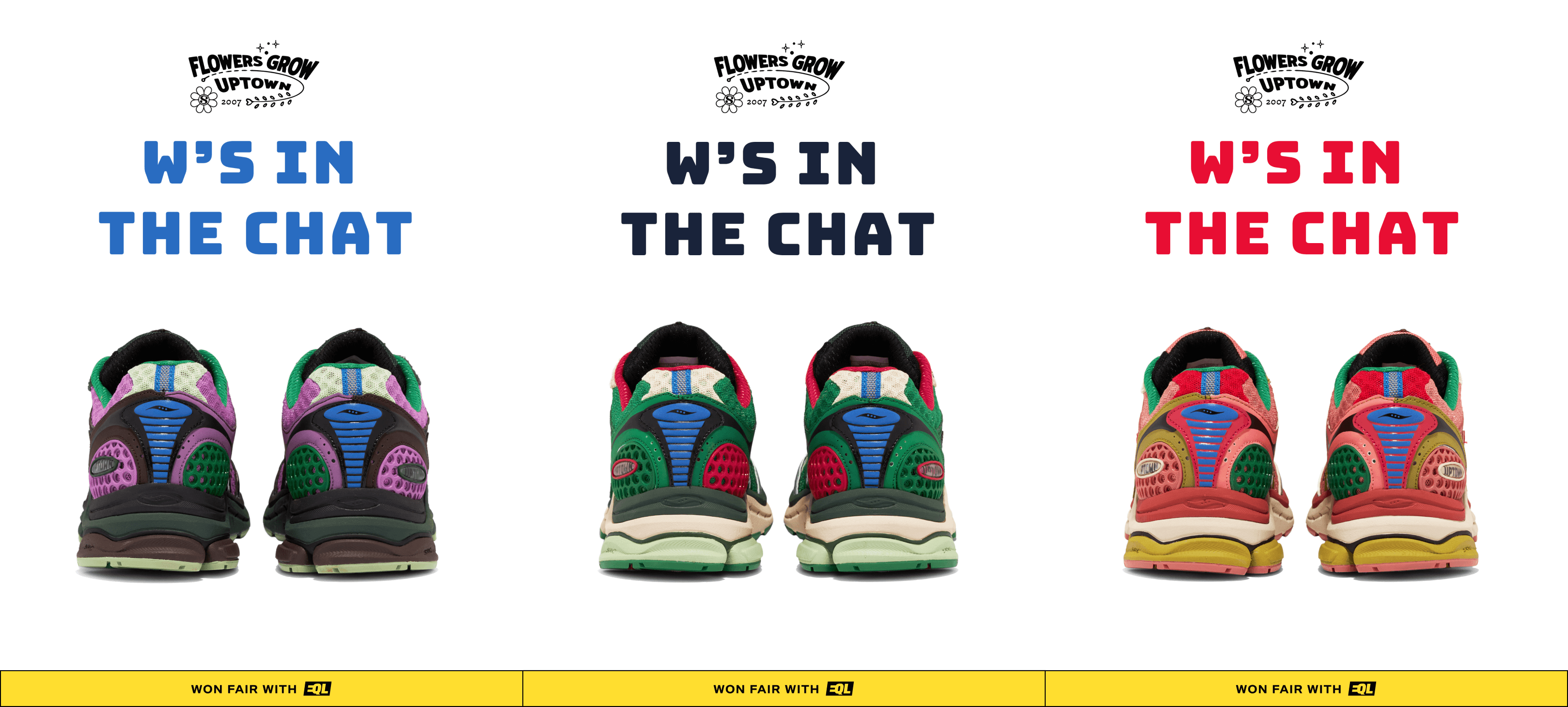
That restraint doesn’t mean disengagement. In fact, the data has shown something encouraging. With his current Flowers Grow Uptown collection, Jae was surprised to see that demand was spread evenly across the lineup.
“Everyone was really trying to get all three pairs,” he says. “There wasn’t one undeniable favorite.”
For Jae, that balance is meaningful. One of his biggest inspirations, Virgil Abloh, proved that it was possible to scale without losing intent, to create multiple moments without diminishing any of them.
“To be able to scale in a way where people don’t feel like you’re falling off, or like you’re just selling them something,” Jae says, “where there’s actual intent behind it. That’s me achieving some of my personal goals.”
Legacy beyond product
As the conversation widens, Jae’s focus shifts from sneakers to impact. When asked about legacy, his answer isn’t framed around accolades or milestones.
“I want my legacy to be that I was just a bridge to other people.”
He talks about visibility and what it means for someone watching from the outside to see a path that once felt unreachable.
“For the person that doesn’t think this is possible. Selling product. Traveling the world. Attending events. I want to be motivation for them.”
While he still has personal goals, his sense of purpose has expanded.
“I think my impact will be much greater felt than what I’ll ever do in this life.”
A different way forward
Jae Tips’ perspective reflects a broader evolution in sneaker culture. Creators are no longer judged solely by what they make, but by how they treat the people who show up for it. Launches have become moments of truth.
Fairness, in this context, isn’t a talking point. It’s alignment - between values and execution, between creator and community.
For Jae, that alignment isn’t optional anymore. It’s foundational.
And as the culture continues to shift, voices like his suggest that the future won’t be defined by how fast something sells out, but by who feels invited to be part of the story when it does.




.avif)